About Laparoscopy Trolley
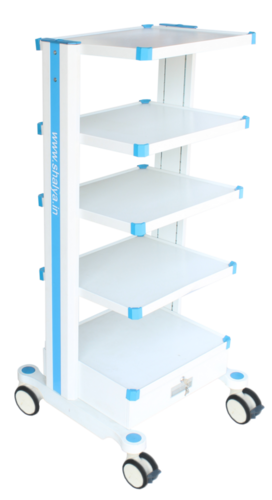
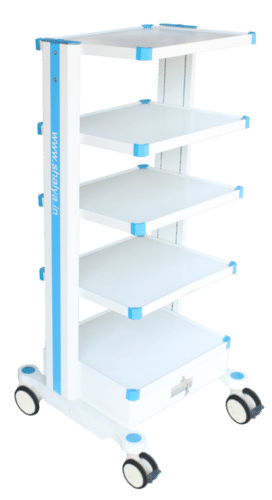
The provided Laparoscopy Trolley is used only to move laproscopy equipment in a controlled and safe manner. This trolley, which has an epoxy powder covering, is in high demand in many hospitals. At our extremely sophisticated production facility, our highly qualified employees create this trolley using exceptional quality raw materials and cutting-edge procedures. Additionally, this Laparoscopy Trolley has passed quality checks and is available from us at discount pricing.
Features:
robust design
excellent conclusion
Variable appearance
Mobility and Stability for Effortless TransportThis laparoscopy trolley boasts four caster wheels with two brakes for smooth, silent, and controlled movement throughout the surgical suite. Antistatic, non-squeak wheels make it ideal for sensitive operating environments. Ergonomic push handles on both sides allow for comfortable and safe maneuvering, ensuring that equipment can be transported without risk of accidental movement or operator fatigue.
Optimized Space with Adjustable Shelving and Integrated Cable ManagementEquipped with both adjustable and fixed shelves, this trolley supports varied equipment configurations and evolving clinical needs. Integrated, concealed cable channels keep power cords neatly managed, reducing clutter, tripping hazards, and time lost to untangling wires. Multiple power sockets and mounting provisions for cameras, insufflators, and light sources further enhance organizational efficiency and workflow.
Heavy-duty Construction with Security and Safety in MindConstructed from mild steel or SS304, the trolley boasts a robust, corrosion-resistant frame for reliable longevity in busy healthcare settings. The powder-coated or polished surface provides easy cleaning, and the lockable drawer/safety box secures valuable or sensitive devices. Each detail reflects the highest standards in medical equipment safety and usability, facilitating seamless storage, organization, and transport of laparoscopic instruments.
FAQs of Laparoscopy Trolley:
Q: How does the laparoscopy trolley ensure easy and safe mobility during surgery?
A: The trolley is fitted with four caster wheels, two of which have secure brakes, and features antistatic, silent, non-squeak castors. Ergonomic push handles on both sides allow smooth and safe maneuvering, even in congested operating environments.
Q: What equipment can be organized on the trolley, and how are the shelves configured?
A: The trolley can organize laparoscopic equipment, monitors, endoscopy units, and essential accessories. It includes four shelves or cabinets, with both adjustable and fixed options, allowing users to adapt the configuration according to their specific equipment needs.
Q: When should hospitals consider using the laparoscopy trolley, and where is it most applicable?
A: Hospitals should use this trolley in operating rooms, surgical suites, or other medical settings requiring organized and accessible laparoscopic or endoscopic instruments. Its heavy-duty, corrosion-resistant structure and ample storage capacity make it ideal for routine and demanding surgical procedures.
Q: What cable and power management features are included?
A: The trolley offers integrated, concealed cable management channels and multiple power outlets to safely organize and distribute power to all mounted laparoscopic equipment, minimizing cord clutter and reducing the risk of tripping or accidental unplugging.
Q: How is equipment secured on the trolley, and what are the safety features?
A: Equipment can be safely mounted via dedicated accessory holders for cameras, insufflators, and light sources. The trolley also provides a lockable drawer or safety box to protect valuable or sensitive items, ensuring both device security and compliance with medical safety protocols.
Q: What are the primary benefits of using this trolley in a surgical environment?
A: The trolley enhances workflow efficiency, equipment organization, and transport safety. Its mobile, robust construction, combined with reliable cable and power management, streamlines surgical preparation and minimizes disruptions, thereby supporting more effective operating room performance.
 Call Us :-08045803732
 Mon-Sat 9.00 AM - 6.00 PM







 Send Inquiry

 Send Inquiry
 Send Inquiry
 Send SMS


 English
 Spanish
 French
 German
 Italian
 Chinese (Simplified)
 Japanese
 Korean
 Arabic
 Portuguese