About CO2 Insufflator with Smoke Evacuation
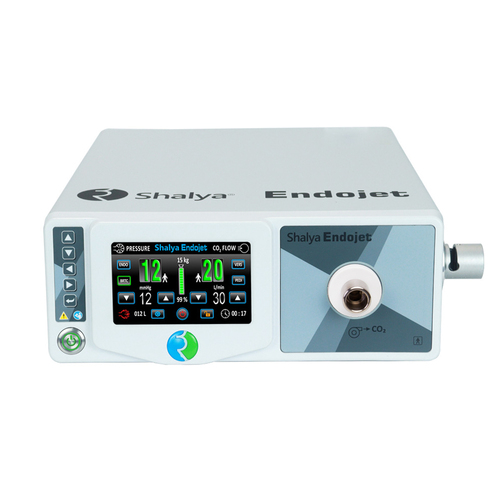
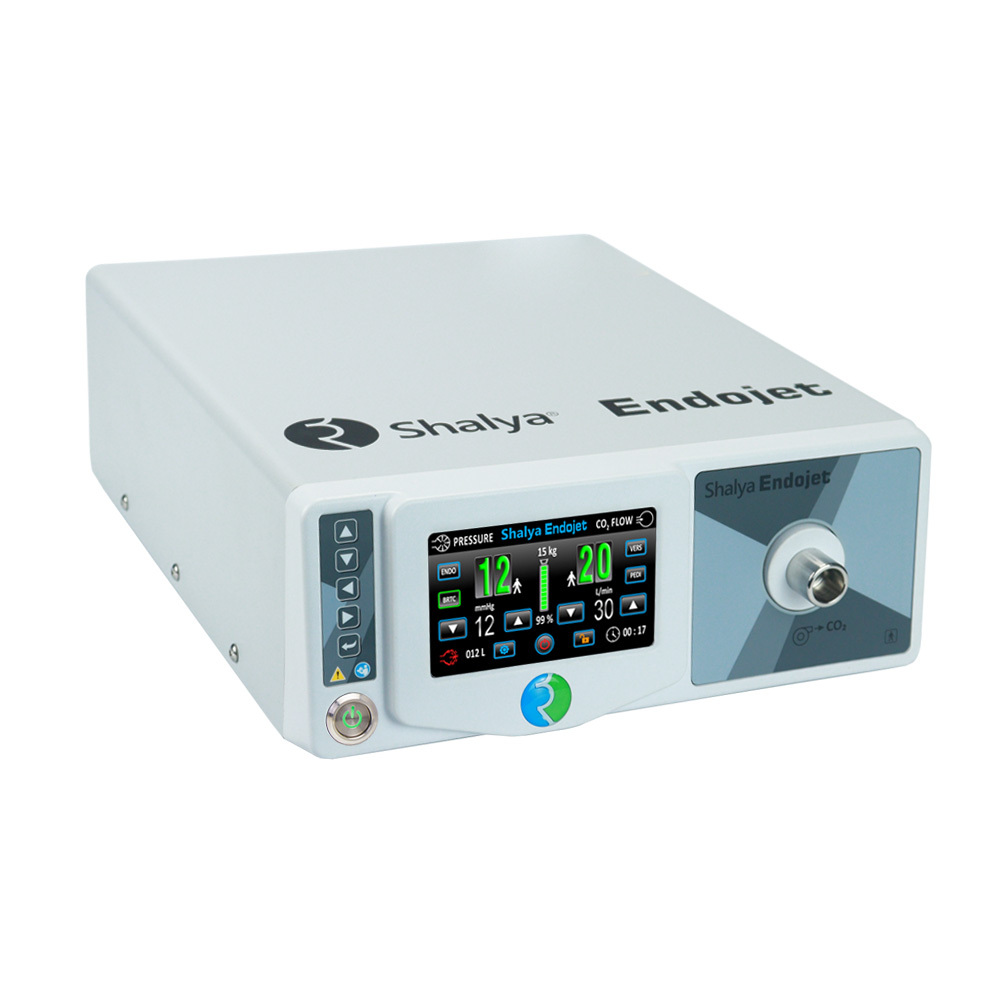
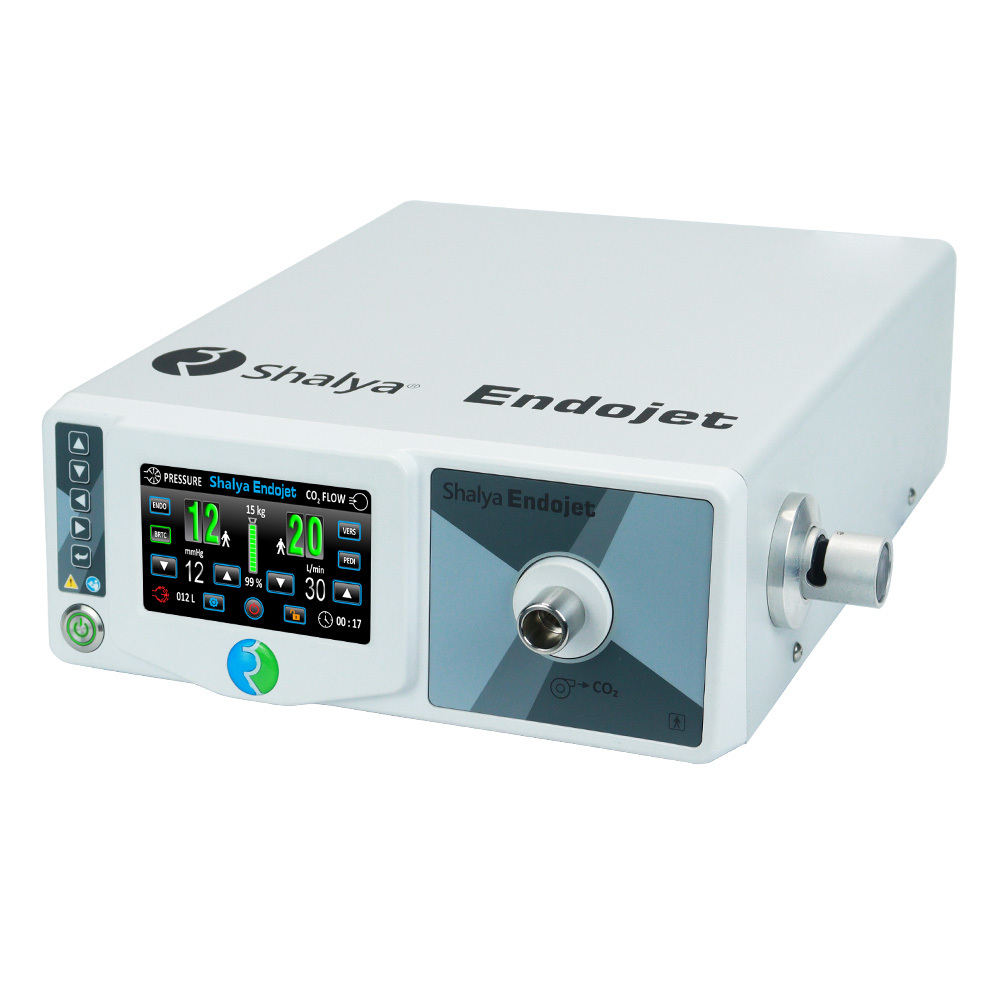
Shalya Endojet-50 CO2 Insufflator with Smoke Evacuation is a medical device used to treat a variety of conditions, from sinusitis to ear infections. The device works by delivering a high-speed jet of saline solution into the nasal cavity, sinuses or ears. The saline solution helps to clear away debris, reduce inflammation and flush out bacteria. It can also be used to help irrigate and cleanse after surgery and to apply medication directly to the affected area. The device is easy to use and is a safe, non-invasive and effective treatment option.
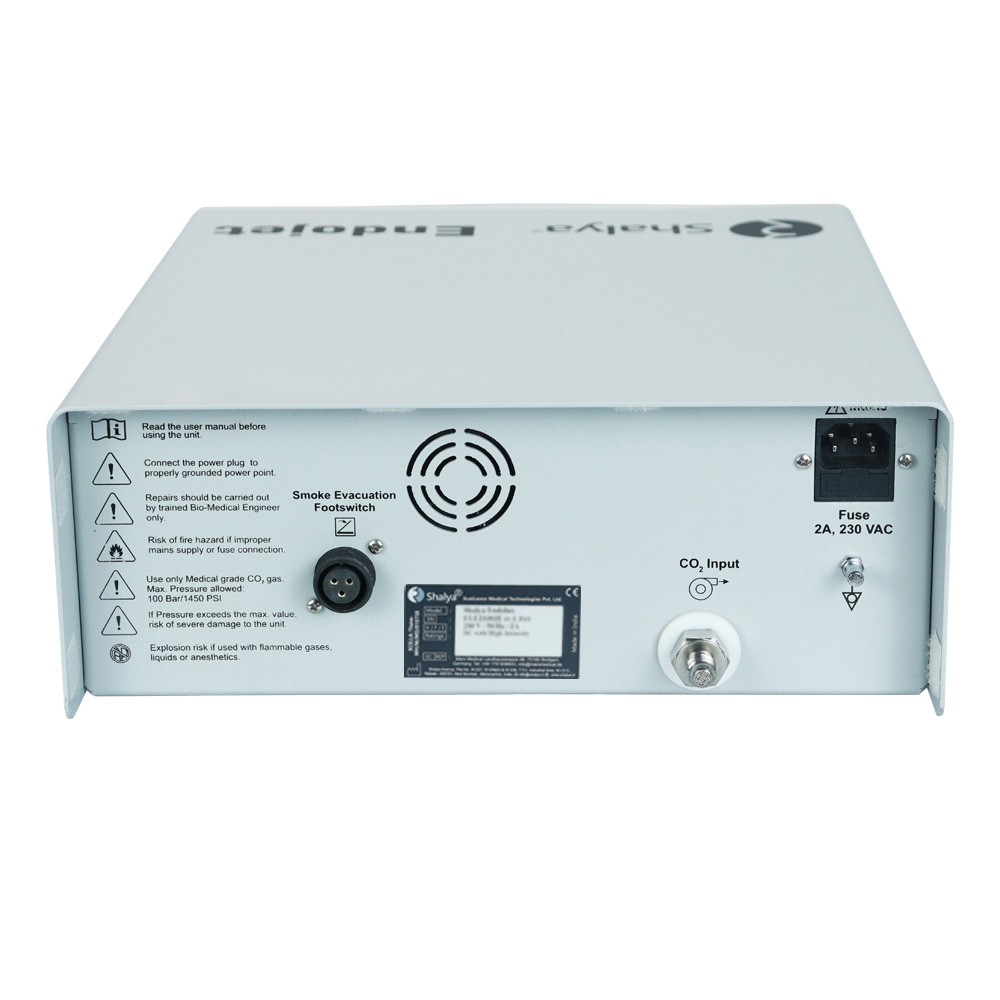
Reliable CO2 Insufflation and Smoke EvacuationThe device combines precise CO2 delivery and advanced smoke evacuation for enhanced surgical outcomes. Its adjustable flow and pressure controls, in tandem with high-efficiency HEPA and ULPA filters, remove surgical smoke effectively, creating a safer and clearer operative field. With digital LCD feedback and robust safety mechanisms, surgeons can confidently rely on seamless operation throughout procedures.
Enhanced Safety and EfficiencyFitted with automatic shutdown, a pressure relief valve, and both visual and audible alarm systems, this insufflator prioritizes patient and operator safety. Microcontroller-based control ensures accurate gas flow and pressure, while standard Luer Lock connections simplify integration into existing operating setups.
User-Friendly and Durable DesignConstructed using medical-grade ABS and stainless steel, the device offers long-term durability and easy maintenance. Its intuitive membrane keys and touchpad controls paired with an LCD digital display simplify monitoring and adjustments, supporting efficient workflows in busy surgical environments.
FAQs of CO2 Insufflator with Smoke Evacuation:
Q: How does the CO2 insufflator with smoke evacuation improve laparoscopic procedures?
A: This device delivers regulated CO2 for insufflation and efficiently removes surgical smoke with >99.999% filtration efficiency using HEPA and ULPA filters. It maintains a clear operative field, enhances visibility for surgeons, and minimizes exposure to airborne contaminants during minimally invasive procedures.
Q: What process does the device use to regulate CO2 flow and pressure?
A: The system utilizes microcontroller-based control to automatically or manually adjust insufflation flow rates (0.130L/min) and pressure (030mmHg), ensuring precise and consistent delivery suitable for various laparoscopic and endoscopic techniques.
Q: When is the use of this CO2 insufflator recommended during surgery?
A: The insufflator and smoke evacuator is recommended for all standard laparoscopic and endoscopic surgeries, especially those requiring a maintained pneumoperitoneum and smoke management, such as cholecystectomy, gynecological, or gastrointestinal procedures.
Q: Where can this device be installed or used?
A: This system is designed for use in operating rooms, surgical suites, and hospitals performing minimally invasive surgeries. Its compatibility with medical CO2 cylinders or central CO2 lines allows flexible installation and use across facilities.
Q: What are the main safety features incorporated in this insufflator?
A: Safety is maximized through visual and audible alarms for over-pressure, empty CO2 cylinders, and line obstructions. Additional protections include automatic shutdown, a pressure relief valve, and strict compliance with IEC 60601-1 and ISO 13485 standards.
Q: How is the surgical smoke filtered and what benefit does it provide?
A: Integrated HEPA and ULPA smoke filters capture over 99.999% of surgical smoke, removing particulates and harmful substances. This results in improved air quality, reduced risk of contamination, and clearer visibility during minimally invasive procedures.
 Call Us :-08045803732
 Mon-Sat 9.00 AM - 6.00 PM







 Send Inquiry

 Send Inquiry
 Send Inquiry
 Send SMS
 Call Me Free


 English
 Spanish
 French
 German
 Italian
 Chinese (Simplified)
 Japanese
 Korean
 Arabic
 Portuguese